Guide on Auction Houses that Sell Rare Books & Medieval Manuscripts
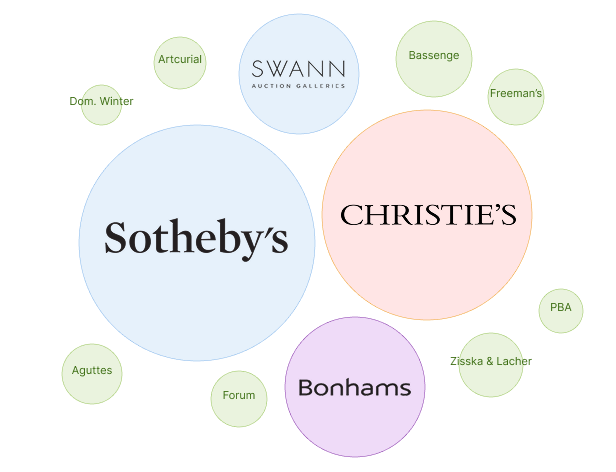
A Redditor once asked me where I track manuscript and rare book prices. I summarized my answer into "Tier 1" houses, Regional houses, online bidding platforms like Invaluable that basically "aggregate" most regional houses, and eBay. But the answer of course is much more detailed.
This blog will go into detail on navigating these auction houses where rare books and manuscripts tend to appear (so I'll ignore great but irrelevant houses like Phillips). The two undisputed leaders are Sotheby's and Christie's who only take the best quality material. Below them is a layer of serious specialist houses that the trade trusts (but newcomers are not aware of). And beneath that, a wider ecosystem of regional auction rooms, online platforms, and general houses where manuscripts appear occasionally, priced by "specialists" who are knowledgeable but not deep sub-specialists.
Terminology: the hammer price is what the auctioneer's gavel marks. The price realized - what you actually pay - is the hammer price plus the buyer's premium, which at every house discussed here runs between 25% and 30% on typical lots (some American houses up to 33%!). This distinction matters more than most new buyers expect. Budget for it accordingly.
Leaders (Tier 1)
SOTHEBY'S Market Leader · ~26% buyer's premium · NY / London / Paris · Founded 1744 · www.sothebys.com
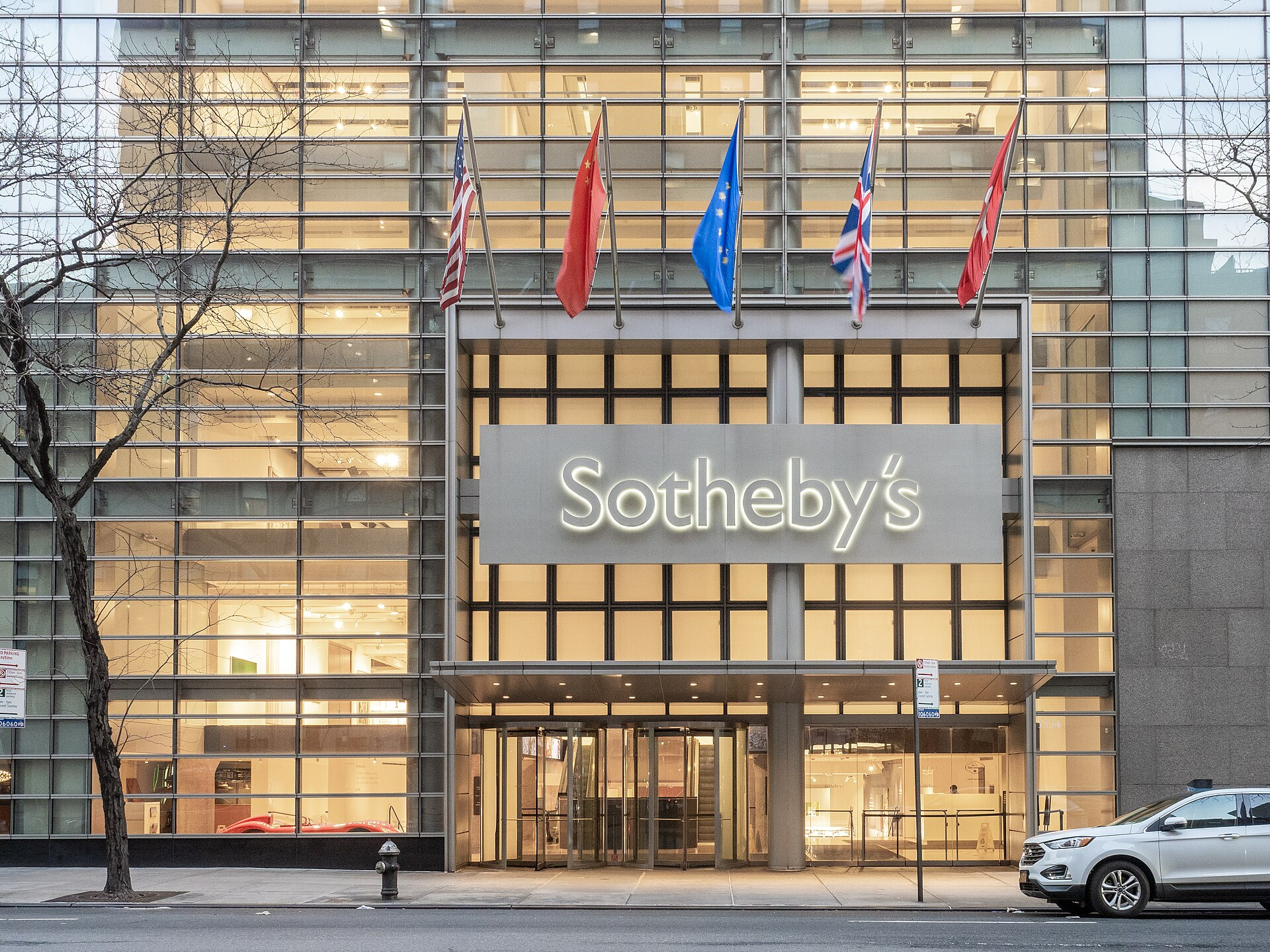
The oldest and, by recent numbers, dominant force in the market. History is important: Sotheby's was founded as a book auction house in 1744, with fine art and jewellery coming later. In 2025 the books and manuscripts division hit ~$82 million across three cities, up by 33% from 2024. The standout was the Bibliotheca Brookeriana, a single-owner Renaissance library that achieved $40 million (a world record for a book sale series).
This is where the most significant Tier 1 medieval manuscripts and rare books appear. Their annual Book Week (OctoberDecember, all three locations) is the closest thing the rare book world has to a season. Catalogues are written by credentialed specialists and the scholarship is reliable. Most lots are in the five-to-seven-figure range, but entry-level pieces do surface occasionally in the $2,000-$5,000 band.
CHRISTIE'S Market Leader · ~26% buyer's premium · London / NY / Paris · www.christies.com
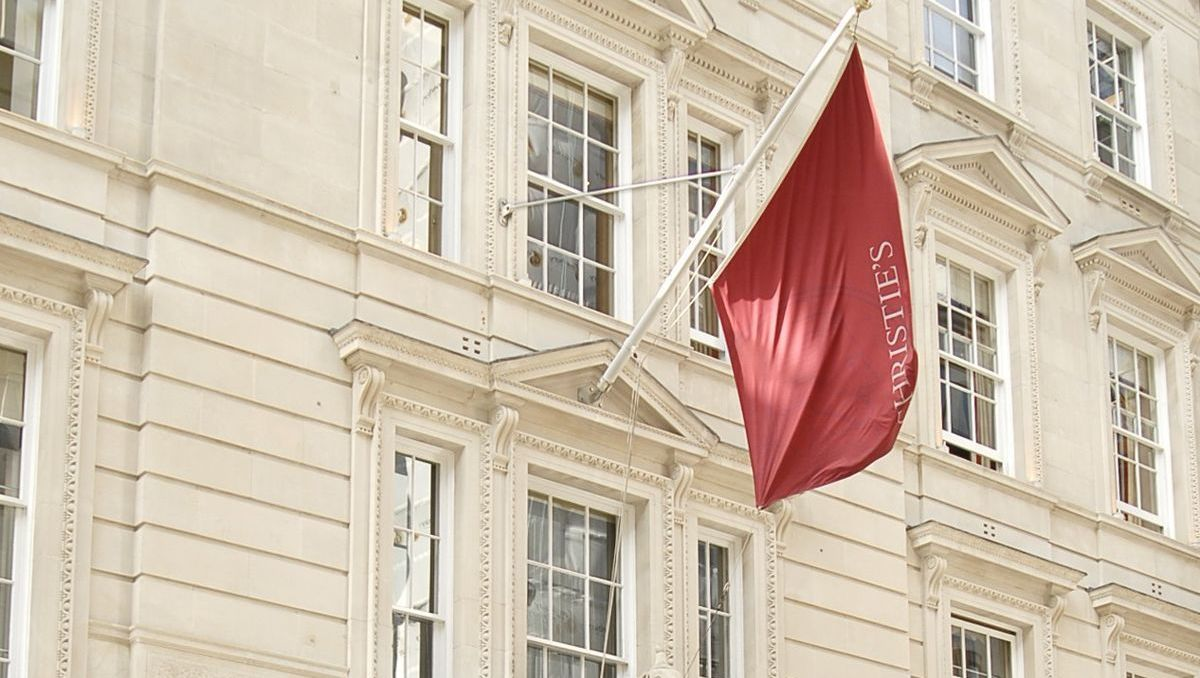
Christie's and Sotheby's are close enough that collectors routinely compare both before consigning. There are barely differences in my opinion: Christie's has historically skewed toward Continental European manuscripts while Sotheby's leans English and American; Christie's catalogues tend toward the visual and beautifully illustrated, Sotheby's toward bibliographic depth (with a prolific video/YouTube presence in all subjects as of this publication). In practice, both are largely interchangeable at the top of the market. You can't go wrong with either.
Major sales regularly feature exceptional Books of Hours and incunabula; for example, the Illuminated Manuscripts from the Collection of Elaine and Alexandre Rosenberg in 2020. For medieval and rare book collectors, both houses' calendars and auction outcomes are mandatory tracking. Like Sotheby's there are many affordable pieces in the $1,000-$5,000 range though many pieces regularly reach $100,000 or >$1,000,000.
Specialist Houses (Tier 2)
BONHAMS Mid-Market Specialist · ~25% buyer's premium · London, New York, Edinburgh · Founded 1793 · 20+ sales/yr · www.bonhams.com

Smaller than the Tier 1 houses but with a books and manuscripts department of genuine depth. Covers everything from illuminated manuscripts and incunabula through natural history, history of science, and fine bindings. Tend to run thematic sales like History of Science & Technology, Travel and Exploration, Women Through History, etc. For medieval collectors specifically, a wonder illuminated leaf or cutting will find its way into a random auction if the bigger houses consider too modest for their rooms. More accessible than Christie's or Sotheby's and in my experience their customer support/flexibility is much better.
Best for: Mid-range illuminated material, history of science, thematic collections. Lots range from $100-$100,000+. Very wide variety but many things may not be "Tier 1" like in the leading houses.
SWANN AUCTION GALLERIES Decent for New Collectors/American collectors · 27% (up to $100k) / 22% ($100k–$1M) / 12% (above) · New York · Founded 1941 · 40+ sales/yr · Family-owned · www.swanngalleries.com
High quality house with very high volume and good research/experts. The largest specialist auctioneer of works on paper in the world, covering rare books, autographs, maps, prints, and manuscripts across 40+ sales a year. The key differentiator is approachability: specialists are reachable, easy to communicate with for American audiences - which a meaningful contrast to Tier 1 houses who often have long response times or regional (particularly German houses) that can sometimes be inflexible. Price points are also genuinely different: while Sotheby's rarely estimates below five figures, Swann regularly sells early printed books, medieval fragments, and significant letters in the hundreds to low thousands of dollars.
Best for: First-time auction buyers, collectors at the $500–$20,000 level, Americana, maps, early printed books. Also the right consignment choice for material the larger houses would overlook. Heavy focus on American audiences also interestingly leads to higher outcomes - even if a leaf is a random single lot in a medley of items in an auction.
Regional Houses (Tier 3)
This tier is a personal favorite of mine because compared to USA-based auction houses, less international attention, bidding times not during US-working hours, and languages that aren't English means lower estimates and thinner competition.
| House | Location | Sales/yr | Best for |
|---|---|---|---|
| Galerie Bassenge · bassenge.com | Berlin | 2 | German & Central European MSS, incunabula, works on paper |
| Zisska & Lacher · zisska.de | Munich | 2 | Medieval illuminated MSS, incunabula, maps, German-market material |
| Aguttes · aguttes.com | Paris | 2 | French Books of Hours, literary autographs, mid-market Continental MSS |
| Artcurial · artcurial.com | Paris | ~4 | Early modern material; secondary to its art dept but worth scanning |
| Bruun Rasmussen · bruun-rasmussen.dk | Copenhagen | ~4 | Scandinavian & Northern European provenance; often under-bid by outsiders |
| PBA Galleries · pbagalleries.com | Berkeley, CA | ~12 | Antiquarian books, fine press, West Coast collector base |
| Dominic Winter · dominicwinter.co.uk | Cirencester, UK | ~6 | English MSS & documents, maps, ephemera; lower premiums than London |
| Forum Auctions · forumauctions.co.uk | London | ~6 | British literary & historical material; strong online bidding |
| Freeman's | Hindman · freemansauction.com | Philadelphia | ~6 | Americana, maps, illuminated leaves, incunabula; oldest US auction house (est. 1805); merged with Hindman 2024 |
Fee Comparison
All figures are approximate and apply to typical mid-range lots as of 2026. Verify current rates before bidding.
| House | Approx. Premium (typical lot) | Third-party surcharge? |
|---|---|---|
| Sotheby's | ~26% | Yes |
| Christie's | ~26% | Yes |
| Bonhams | ~25% | Yes (adds 4% via platforms) |
| Swann | 27% up to $100k | Yes, additional via Invaluable |
| Regional | 28-33% | Yes |
The Third-Party Premium: If you bid through Invaluable, LiveAuctioneers, or a similar aggregator platform, all houses charge an additional fee on top of their standard buyer's premium (typically +4%). Always bid directly through the auction house's own website or by telephone.
Online Aggregators, eBay, Etsy, and FB Marketplace
Invaluable and LiveAuctioneers aggregate live bidding across hundreds of houses, including most Tier 2 and 3 houses above. I personally love using these as price research tools that I use to monitor past and upcoming sales globally. As bidding platforms they're expensive: both add 3-5% on top of the house's own premium. As mentioned previously, I frequently use them to find the lot/auction and try to bid directly.
eBay: the largest online auction is entirely different and with much more risk (and opportunity). Genuine material frequently appears - mostly single leaves from dismembered Books of Hours (a very different post), parchment fragments, lower-value early printed books. Many items are misidentified or unidentified (i.e. I've seen manuscript leaves sold as "Inkunabel"). eBay sellers are not specialists, so buyer beware. Many pieces being sold have questionable provenance - especially recently broken manuscripts. Additionally, fees have increased recently so many eBay sellers have retired en masse (maybe this is a good thing). However, it is important to note this is often newcomers' inexpensive entry into rare books and manuscripts.
Etsy and FB Market place are basically worse versions of eBay - most sellers do not know what they are selling (except a rare gem like Adam Weinberg who I believe found a decent arbitrage marketing manuscript leaves on Etsy). Etsy is particularly interesting because its geared more towards "artsy" and DIY-type people who may be buying manuscripts "art" for interior design.
Conclusion
Many newcomers coming to the rare book and medieval manuscript collection hobby start on eBay (although this is quickly changing). Often times, these eBay sales get them to dealers' websites but may get turned off by how high the prices are and wonder "where do I get these books?" Besides sourcing them directly from European or US-based estates, the best option is auction houses.
The question of which house to use is ultimately a question of what you are buying and how much you already know. A first-time buyer approaching the market for a manuscript leaf or a modest early printed book will be better served by Swann or Bonhams (not to say these materials are inferior, they may just not be in manuscript or incunable-dedicated auctions). Significant investments often find their way to Christie's or Sotheby's, but this is not the rule. There are often one-off auctions where very high quality pieces can be acquired for modest prices. Most of the houses mentioned int his blog post produce reliable catalogues, but obviously the buyer has to do independent research and often should view in-person. After all, scholarship is just an opinion. I could probably write a whole blog post on the auction psychology and process, but that's for a future post.