Failed December Auction and May Surprise - A Case Study on a Cicero Incunable
Auction Execution Mechanics and Psychology Matter
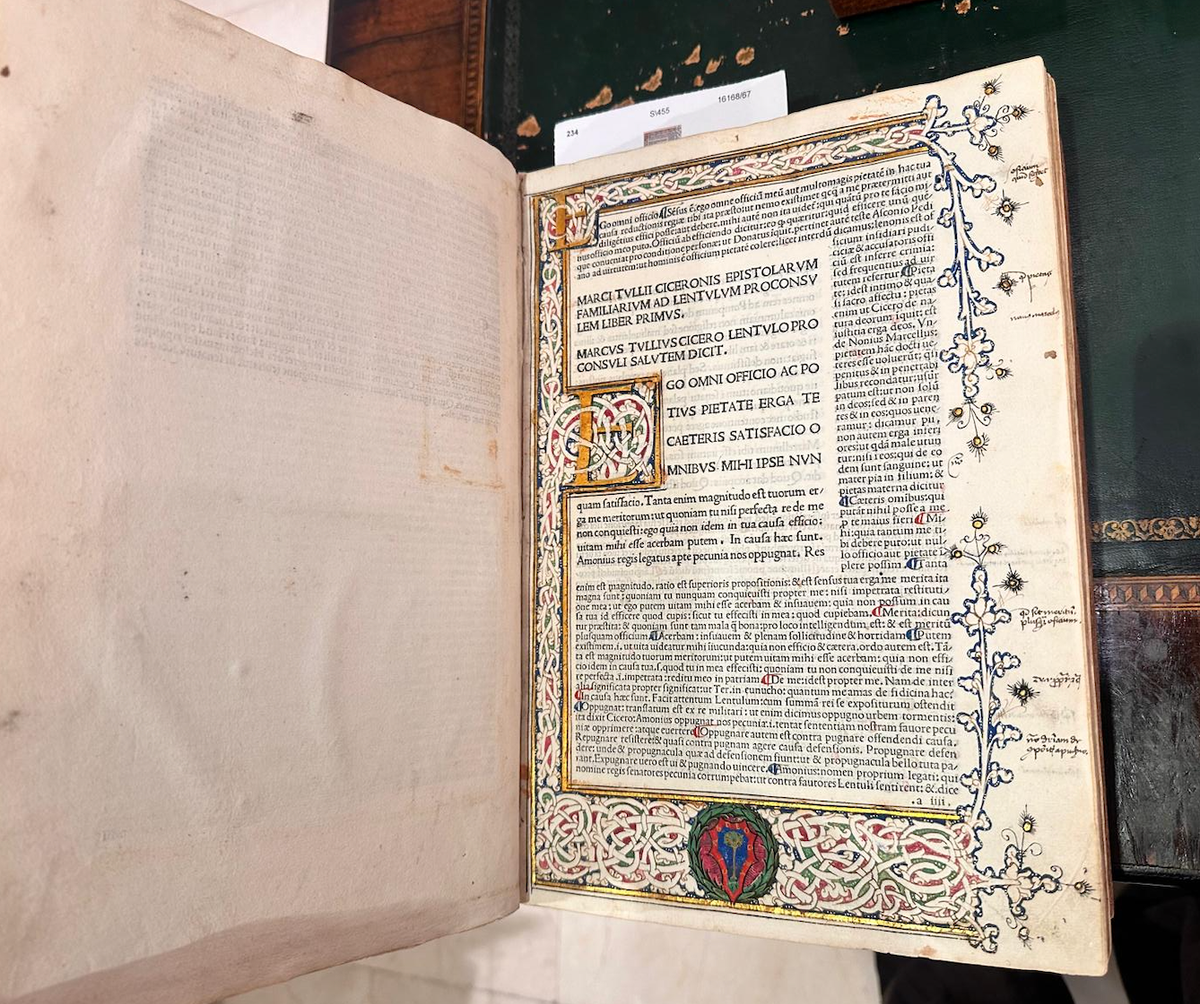
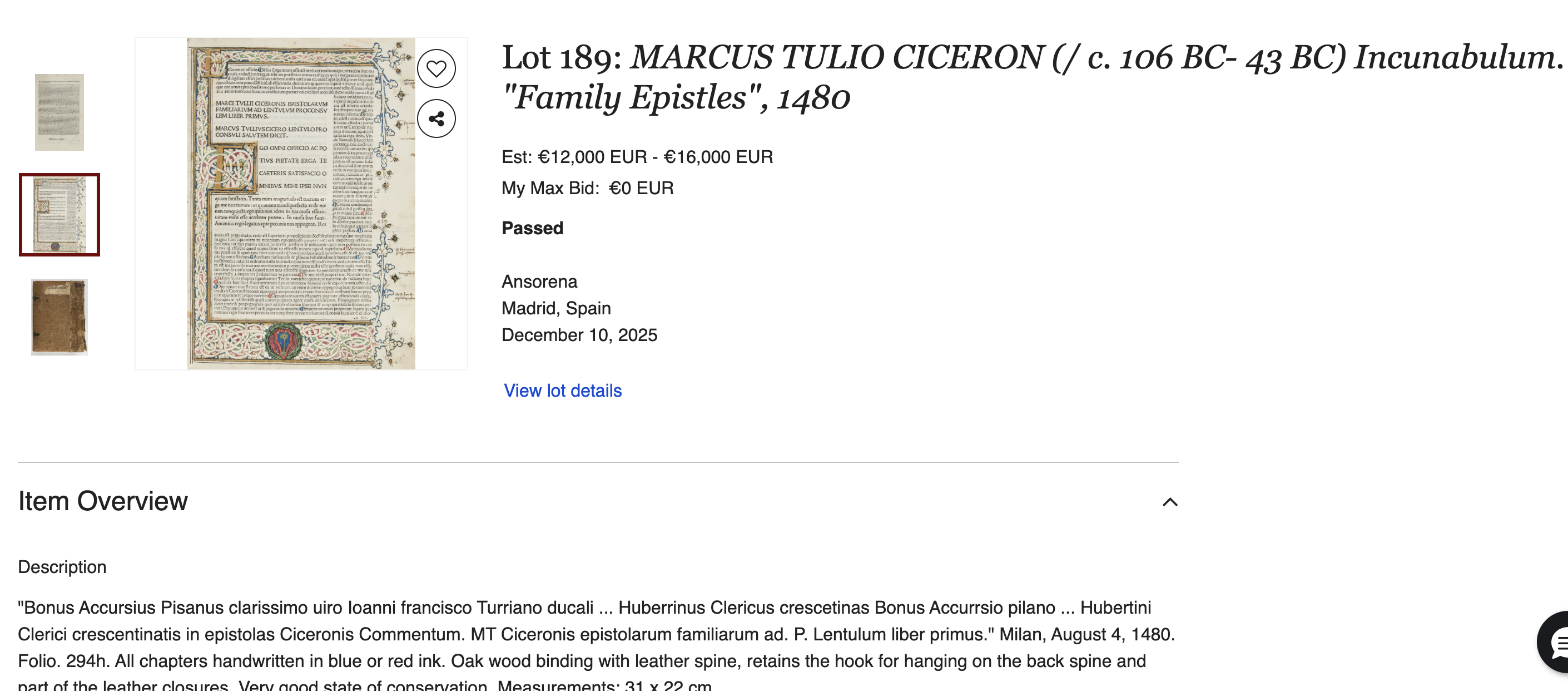
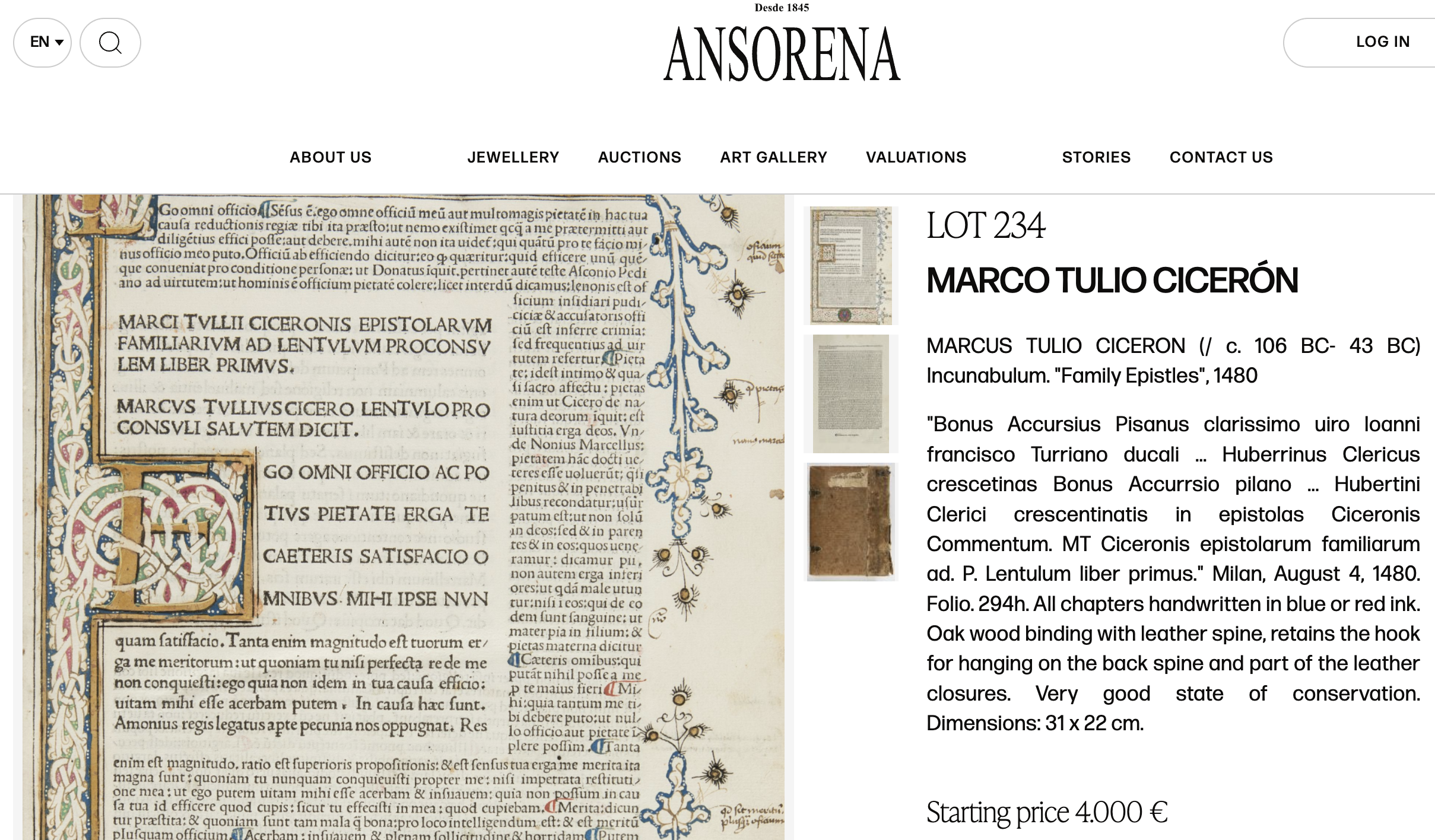
On December 10, 2025, a beautifully illuminated copy of Cicero’s Epistolae ad Familiares, printed in Milan by Bonus Accursius on 4 August 1480, failed to sell at Ansorena. The starting bid was ~€12,000 and was estimated to sell between €12,000-€16,000 hammer.
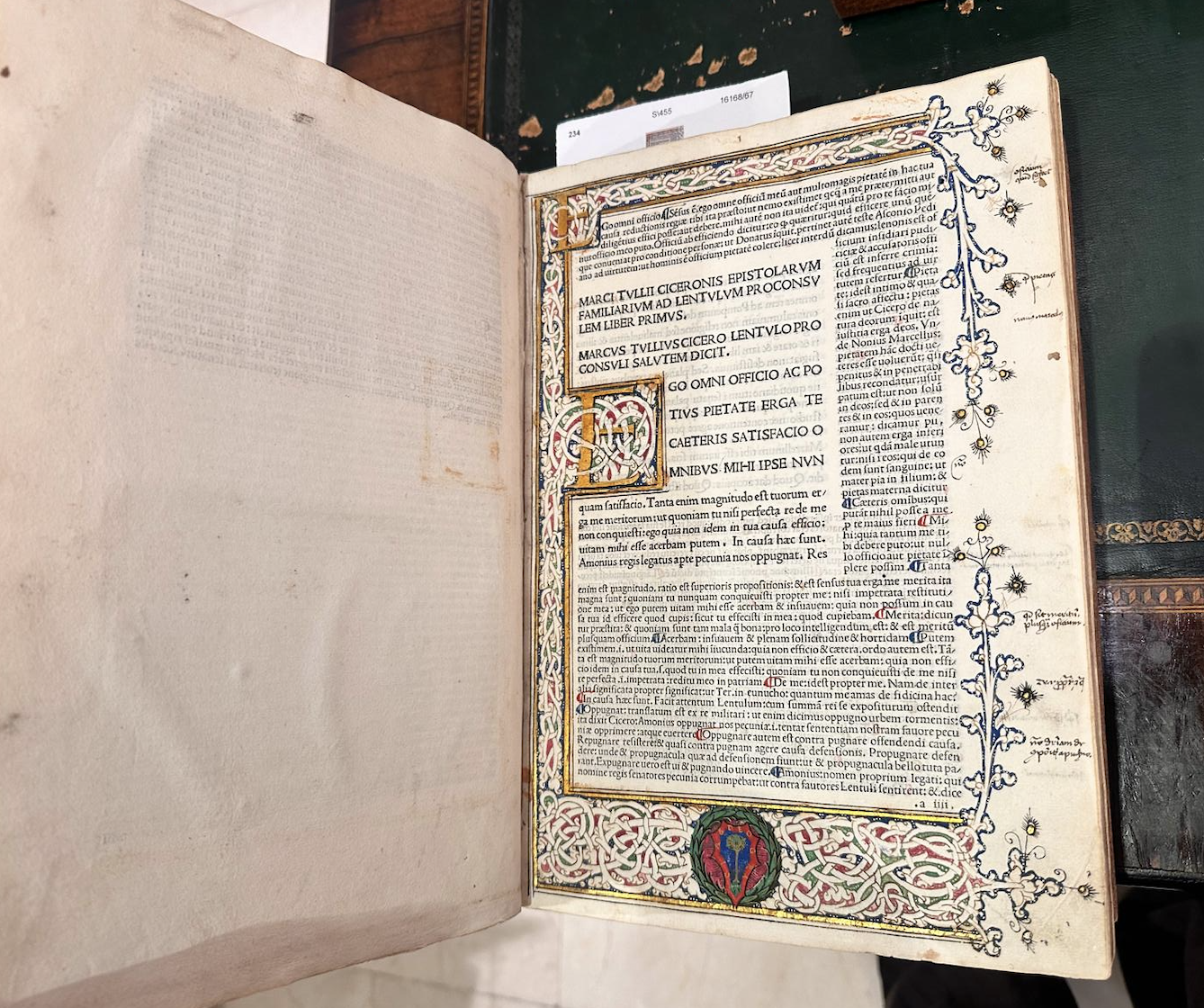
Five months later, in May 2026, the same object returned to the same house at a starting bid of €4,000. This time it sold for €13,000 hammer - exactly what the auction house initially predicted.
I find this sequence genuinely fascinating, and worth unpacking in some detail. Not because €13,000 is a remarkable sum in the manuscript market (I’ll address this later in this post), but because the gap between December and May and gap in starting bid. These dynamics highlight inefficiencies in a thinly traded, highly specialist (highlighted) incunable market.
Description of the Item
The edition itself is rarer than its modest auction appearances suggest. ISTC (ic00747030) records it not as the standard Cicero Epistolae but as the commentary edition: Hubertinus Clericus Crescentinas, In epistolas ad familiares Ciceronis commentum, with dedicatory material from Bonus Accursius to Giovanni Francesco Turriano, ducal questor at the Sforza court in Milan. There are only seven known copies in institutions: Vienna, Paris, Lyon, Besançon, Stuttgart, the Morgan Library, and the Vatican. I have not been able to trace private copies at auction - and certainly not with this level of illumination.
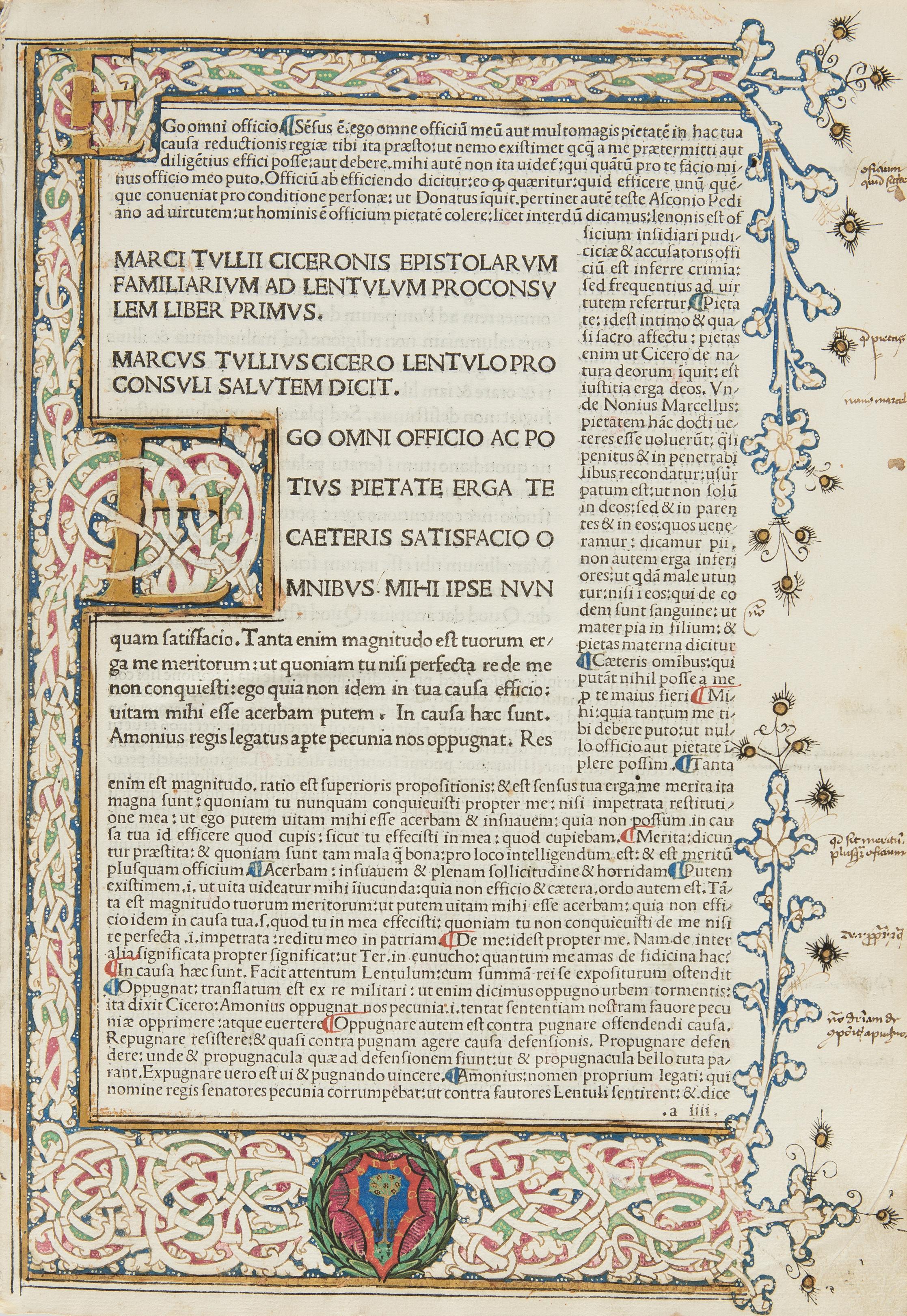
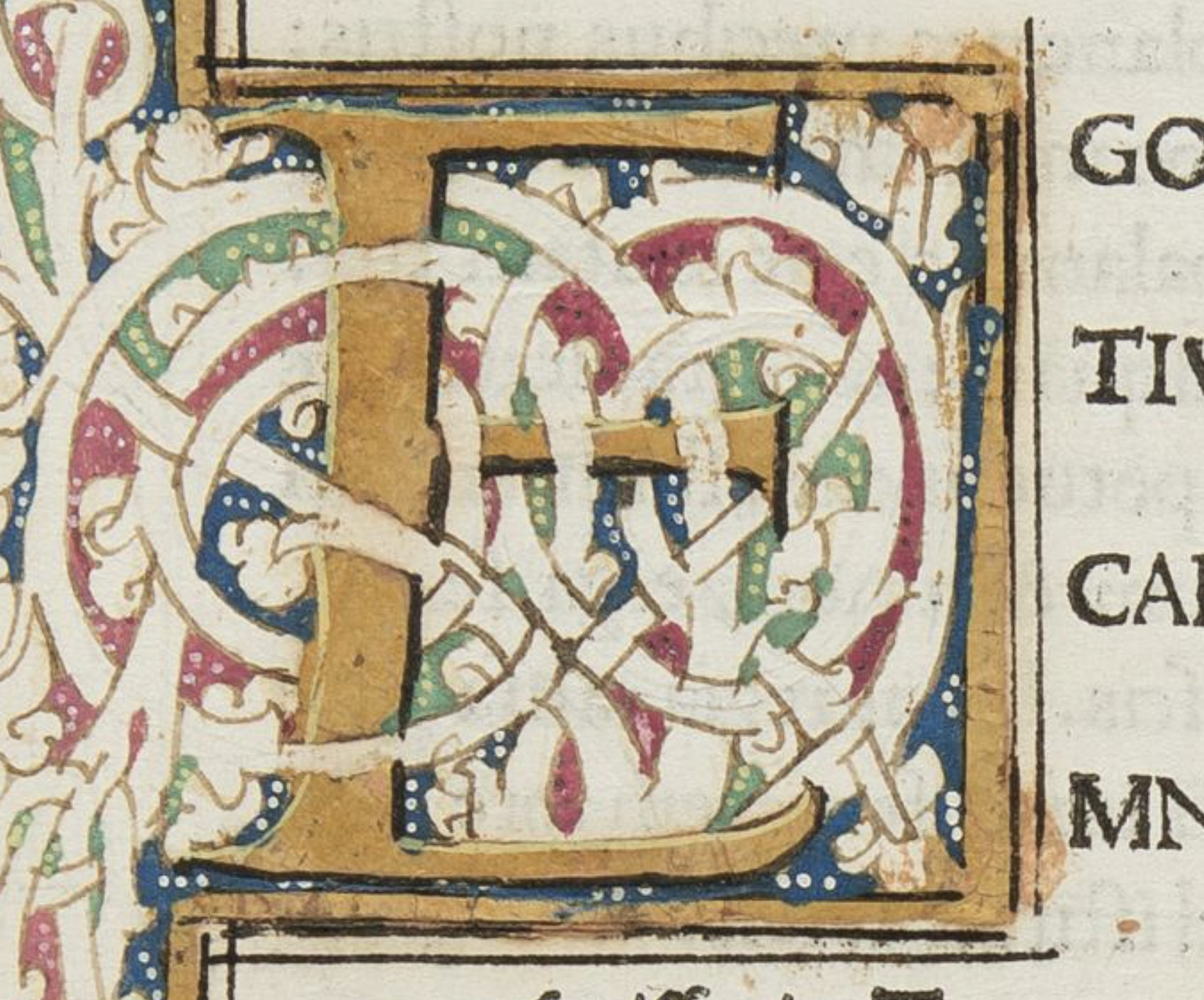
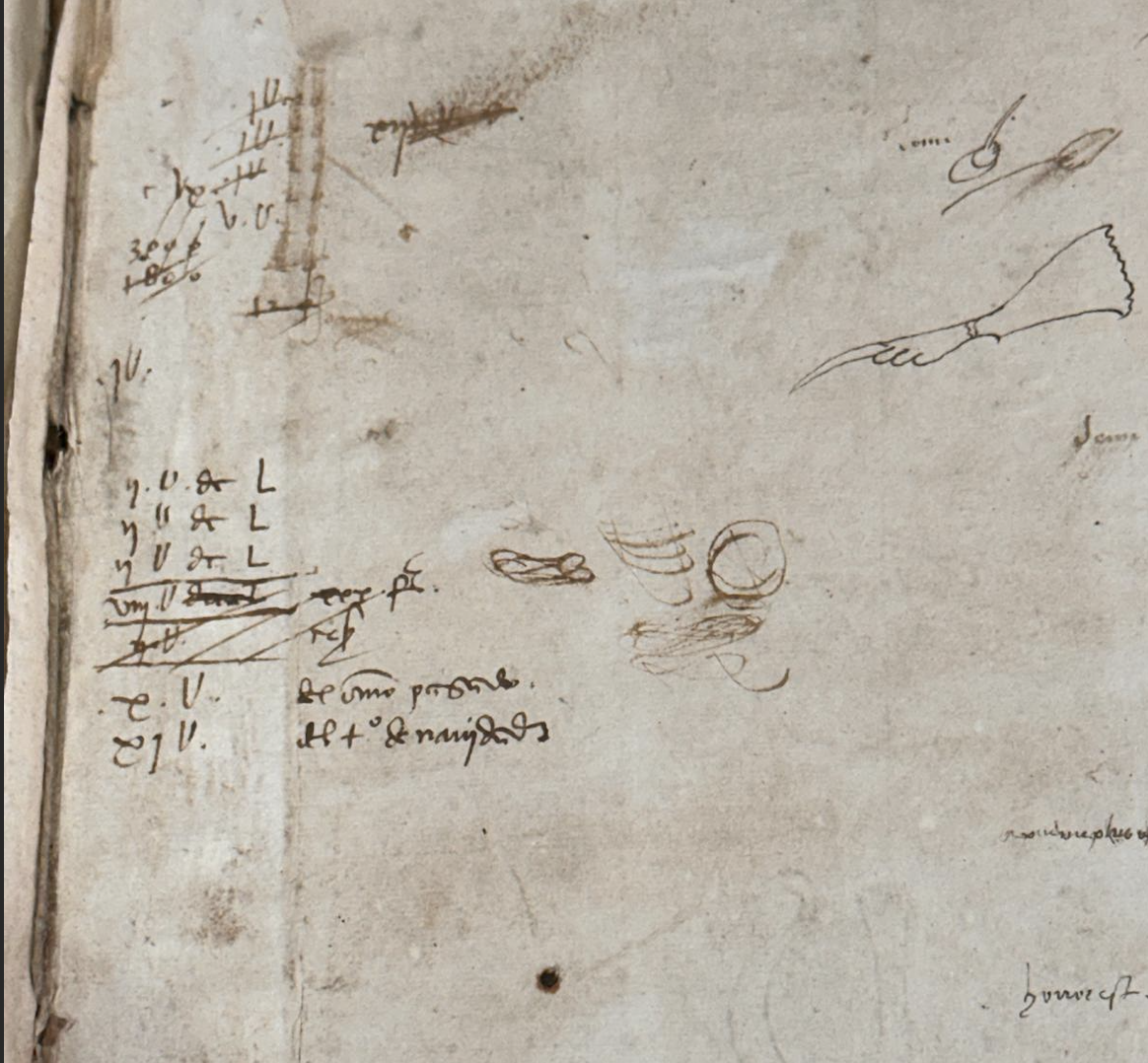
I was not able to identify any specific illuminator or workshop, but the quality was very good. The iconic bianchi girari border - dense white vine coiling on alternating blue, green, and red grounds with gold dot terminals - is characteristic of commercial Lombard workshop production circa 1480. It did not have qualities that point to named illuminators active in the same area/period (Birago, Gigantibus, Cola Rapicano, etc.), but it’s a genuinely attractive object. Only the first page is illuminated but it really jumps out at the viewer. The inhabited initial is well-executed. The binding was average, possibly contemporary, but does not provide us with useful provenance details.
Interestingly, the the lower border medallion sits a device that I think is the most interesting unresolved question about this copy: a tree flanked by two fleur-de-lis(?) on azure background, surrounded by a laurel wreath, with a partial motto reading “[GRA]CIAS DEO GRA[TIAS]“ (”Thanks be to God”) around the rim. The device is unidentified. The tree-and-fleur-de-lis combination points toward northern Italian Lombard heraldry of the late fifteenth century. The fragmentary motto is a common manuscript colophon phrase so I cannot confidently identify who the original owner is (speculations: Calchi family? Humanist-educated ecclesiastical family?).

Most importantly, the May catalogue described the volume as having 294 leaves. The standard collation for this edition (as recorded at the Morgan Library) runs to 358 leaves. That’s approximately 64 missing leaves, or roughly 18% of the complete text. That’s a lot missing. The auction house acknowledged this in their description. But “294 leaves” alongside “very good state of conservation” does not automatically communicate to a non-specialist bidder that nearly a fifth of the book is absent. On top of that, in private correspondence, the auction house mentions they are not sure if the missing leaves are blank pages or primary texts.
Why did December fail?
Three things counted against them: psychology of a €12,000 starting bid, difficult auction season, and knowledge barrier. The average bidder is not an expert on incunables, private collectors internationally who are bidding remotely may be distracted, and institution acquisition budgets are largely committed (typical in December). Only people looking are probably dealers.
And €12,000 as a starting bid, in this room, at this time of year, for an object whose rarity requires explanation rather than being visually self-evident, is too ambitious of a threshold.
Why did May succeed?
The starting bid of €4,000 changed the psychology of the room and to online viewers. I really think this served almost like an advertisement, and during an active manuscript/rare book season. €4,000 is an accessible entry point for a meaningfully wider range of buyers. The timing of the auction helped a lot too, as many US-based investors didn’t have to stay awake at 3 AM. The result confirms this and suggests competitive bidding from at least two determined bidders.
In Conclusion
The auction house was correct (according to the market), but took proper execution to get there. Perhaps this is only obvious in hindsight, but I think physically attractive pieces stand on their own, whereas specialist translation requires the bidder to do research. For example, the auction house specialist just did not do the work to trace down institutional copies and previous auction records/provenance.
Starting bid psychology is asymmetrically powerful. The same object at €4,000 vs. €12,000 attracts a much wider audience. The lower figure invites participation and thus emotional attachment and desire to “win” - thereby driving the price much higher. After all, it only takes 2 bidders.
Anonymous illumination is a double-edge sword. On one hand, the bianchi girari border and inhabited initial are attractive and will certainly invite bidders, but without an illuminator attribution, the decoration is priced as ornament rather than art history and the ceiling is capped (whereas Gigantibus attribution would be uncapped). Same goes for the provenance and heraldry - proper identification and linkage to royal provenance would mean uncapped upside.
In conclusion, I congratulate the winner on their very unique and beautiful acquisition. However, I believe he/she (and apparently at least 1 other bidder) did overpay for this item and by a significant magnitude - easily 4-5x. When I looked I was drawn by the gorgeous illumination and low initial bidding price, and I suspect many others felt the same way. It took a week of research and discussion to truly agree on “what was the catch.” In my opinion, the realistic clearing price for an item like this should be €3,000-€6,000. Beautiful as an art piece, but 18% missing leaves is too much.
Bibliographic Note
The edition discussed is ISTC ic00747030 (GW 13560): Hubertinus Clericus Crescentinas, In epistolas ad familiares Ciceronis commentum, Milan: Bonus Accursius, c.1480. The standard collation of 358 leaves is documented in the Morgan Library copy (PML 15421), with signatures a¹⁰ b–z⁸ &⁸ [con]⁸ [rum]⁸ aa–rr⁸ ss–tt⁶, leaves a1 and tt6 blank. The dedicatory letter to Johannes Franciscus Turrianus is dated Mediolani, iiii. idus augustas - the fourth day before the Ides of August 1480. Readers wishing to verify the institutional copy census should consult the ISTC online at data.cerl.org/istc/ic00747030.