Forged Medieval Manuscript Sold Twice - A Distinct Hand Within the Spanish Forger Group?
The Master of the Spanish Arrival: a nod to the Spanish Forger and the JHU Bibliotheca Fictiva Collection that identified this as a distinct forger.
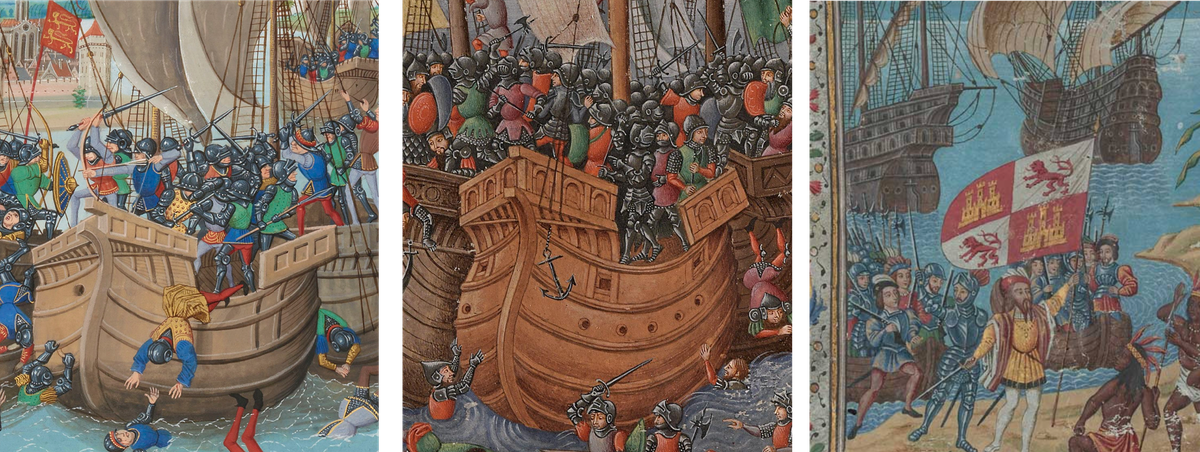
A forged illuminated leaf - yet an undeniably compelling one - achieved a hammer price of €12,000 ($17,500 USD all-in) in 2021, then dropped 60% 4 years later. That made me investigate the piece a bit more and after realizing it looked suspicious, used AI to confirm it is indeed a forgery. However, what is more interesting is that this style is quite distinct within the “Spanish Forger” orbit, which we will investigate further.
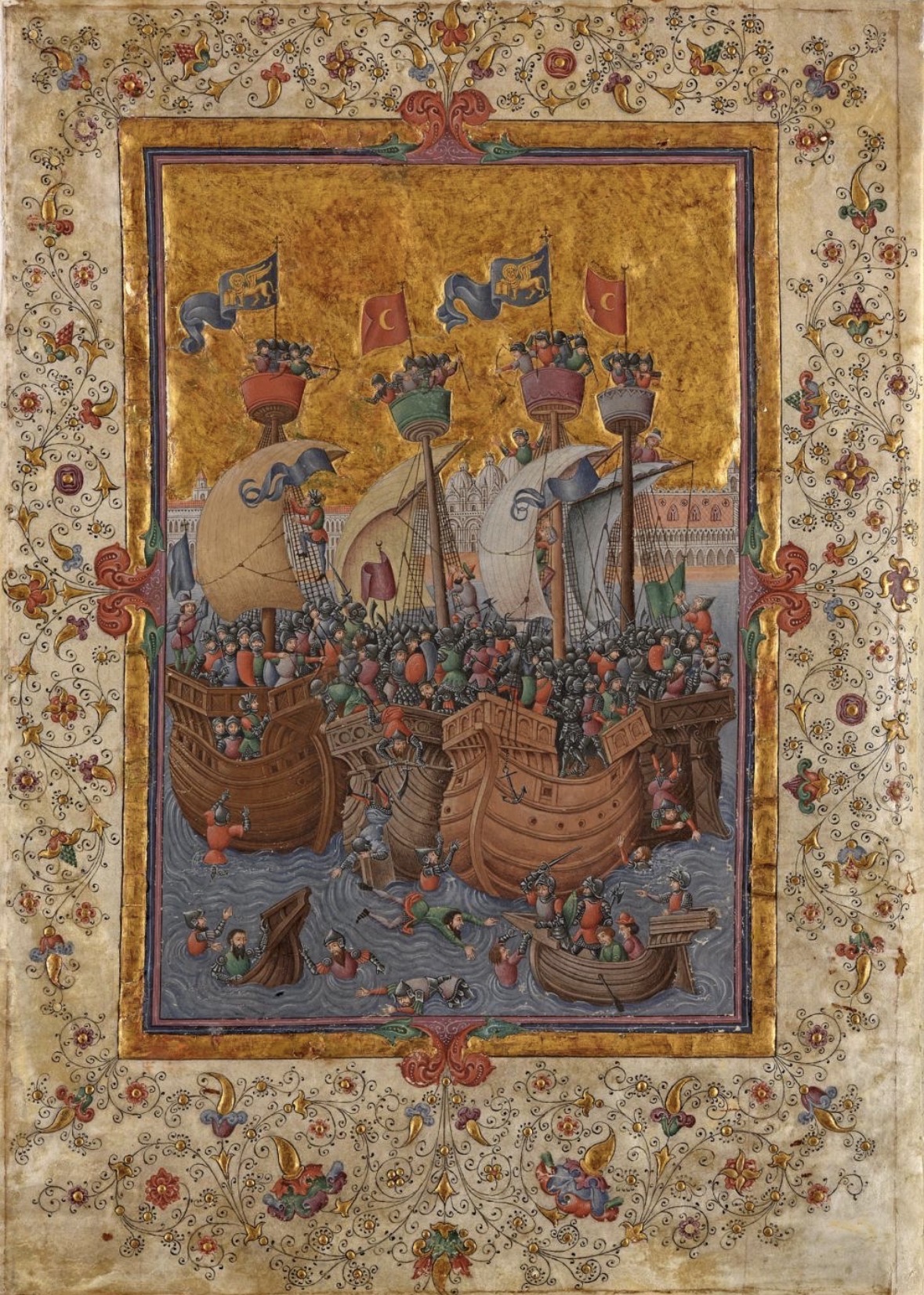
The work in question was offered by Düsseldorfer Auktionshaus as Lot 1225 under the vague attribution “Unbekannter Meister” (translation “Unknown Master”) in its Fine Art & Antique Auction 34d (4 December 2021). The description is equally as thin:
Unknown Master, book illumination (miniature)
Sea battle, likely between Venetians and Ottomans.
Colors and gold on parchment. 45.5 × 33 cm.
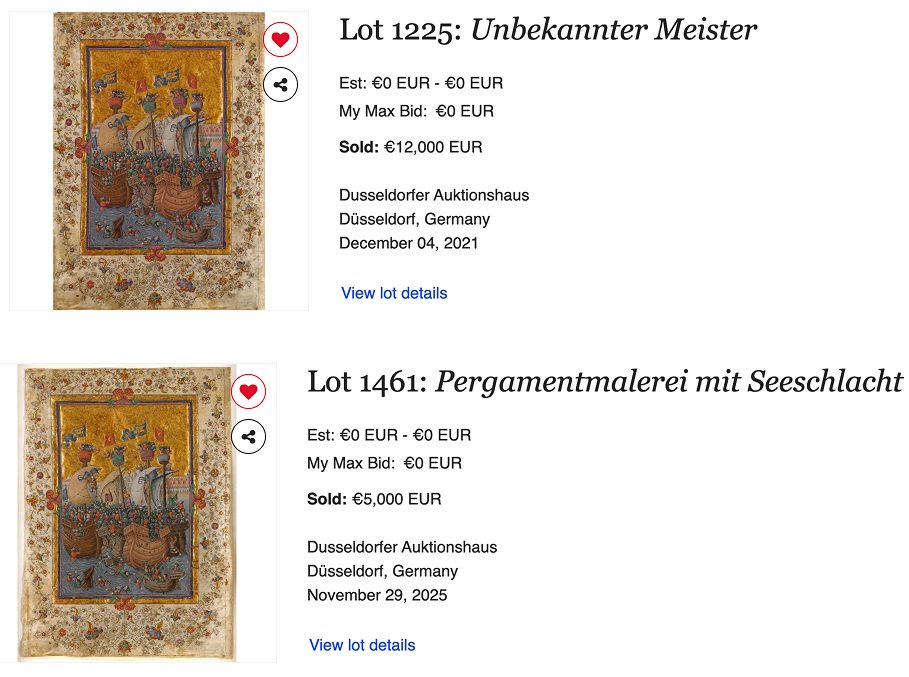
The same leaf resurfaced at the same auction house on November 29, 2025 (this time the display included a frame) and realized €5,000 hammer - a staggering 60% drop. Most likely the same consignor who would have have lost money on this piece.
There are a few reasons why this could have happened:
- Market regime shift: 2021 was a frothy art market across the board, whereas the 2025 art market was much more sober.
- Attribution clarity: The piece was repriced once bidders became more informed and aware of the Spanish Forger and similar forgeries (note )
- Execution: The auction house did not do a great job the first time, and the description was even worse the second time (almost exactly 4 years later).
Based on a combination of one or more of the aforementioned rationale, the fact of the matter is the first auction attracted 2-3 determined buyers whereas only 1 showed up in 2025. This further highlights how thinly traded manuscript markets are. Results here are driven as much by audience reach and marketing, otherwise the outcome falls on the intrinsic visual impact of the piece. Intuitively, a visually striking, gold-rich, one-of-a-kind piece should activate the competitive bidding part of one’s brain - but in practice, many auctioneers fail to consistently educate and reach broader audiences.
How Do We Know It’s a Forgery?
At first glance, the work sits comfortably within the orbit of the Spanish Forger. However, closer inspection suggests something more specific: a distinct hand (or tightly controlled workshop) operating within that broader corpus.
The borders are clearly inspired by the Ghent–Bruges style, yet they never quite resolve correctly - motifs look similar/inspired by, but the style is just not correct. No Ghent-Bruges style has looked exactly like this (the orbs, clutter - which is a dead giveaway, etc.).
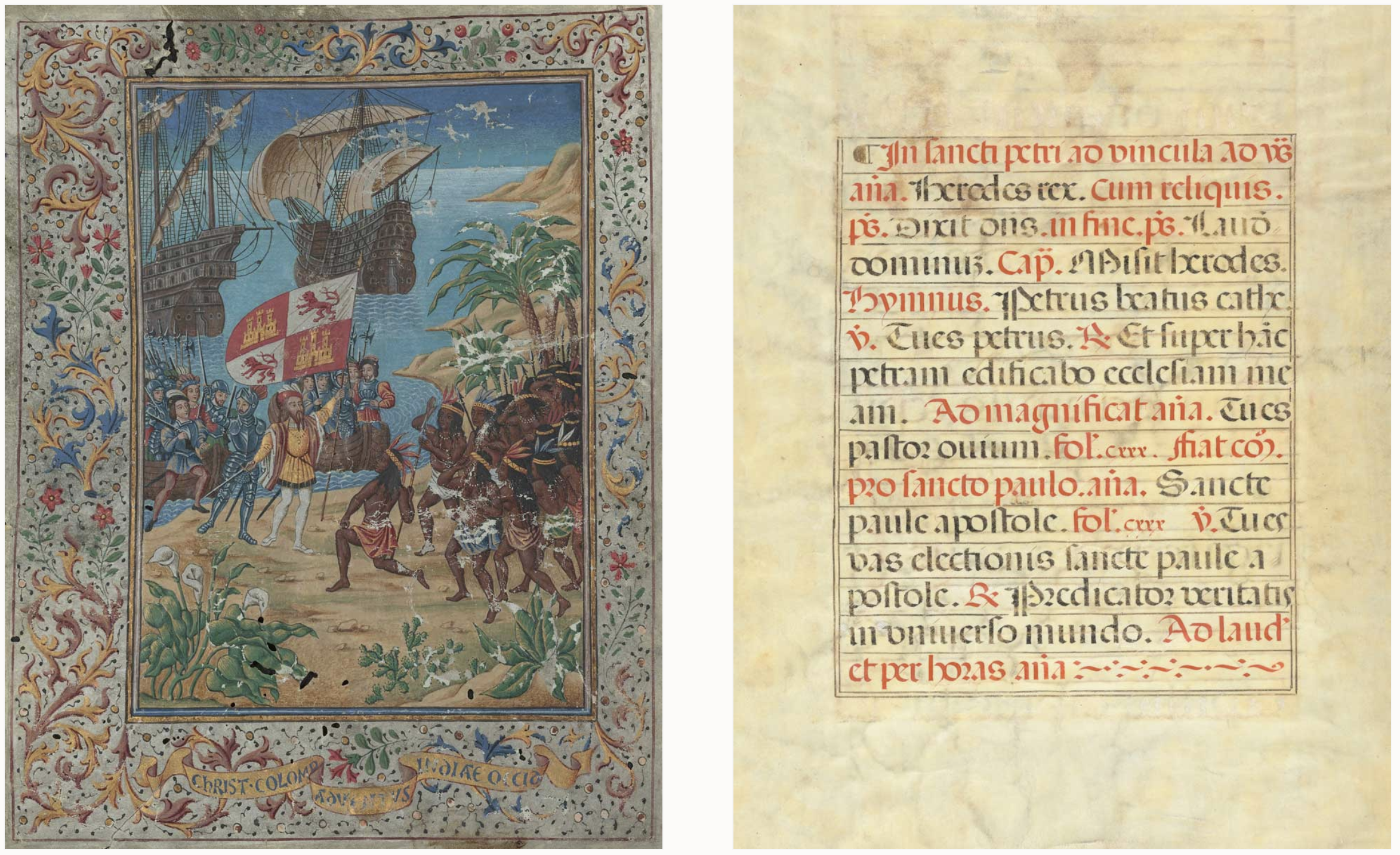
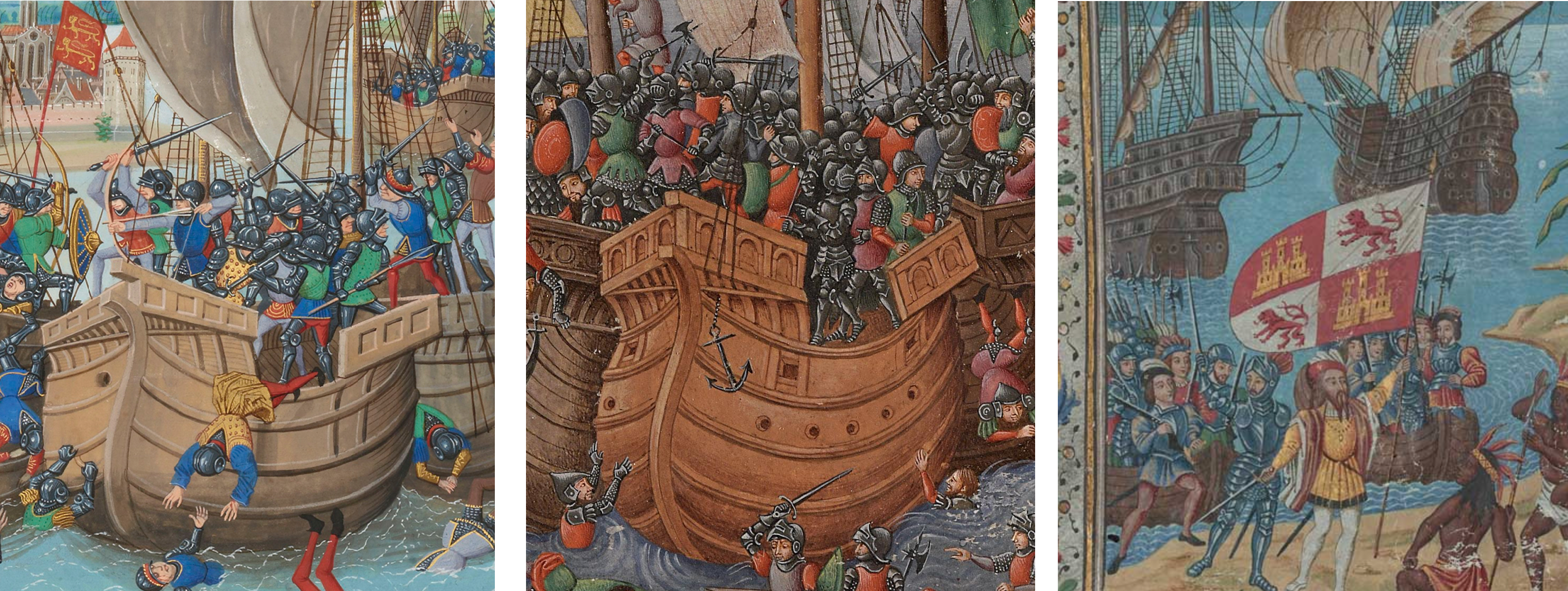
The entire piece was clearly influenced by Froissart’s Chronicles (the scene construction, boat-design, and style of shoes). While the figures lack the saccharine expressions and rounded physiognomies typically associated with the Spanish Forger’s most recognizable “secular” models, the underlying construction - the staging, anachronistic attire (more closely aligned with 19th century impression) and weapon-choice, and figure choreography - aligns closely with material documented by Johns Hopkins University’s 2024 post on the Spanish Forger and JHU’s Bibliotheca Fictiva Collection. Specifically referring to the Christopher Columbus Discovering America miniature (with a Breviary(?) on the reverse) attributed to anonymous (for now) artists inspired by the Spanish Forger.
The subject matter of the leaf - depicting a Venetian–Ottoman naval battle - presents a huge smoking gun. There are no known medieval chronicles (intact or dismembered) that would plausibly serve as a source for such an image in this format. Unlike genuinely dispersed manuscripts, which typically leave a trail of related leaves, this scene appears entirely invented - a hallmark of the Spanish Forger’s practice. The alleged battle in reference, presumably the Battle of Lepanto (the most notable Venetian-Ottoman conflict and certainly the main hand-to-hand over water), occurred in 1571. This is much, much later than the style this manuscript is imitating (potentially off by 100-200 years). Alternatively, the battle may depict the Battle of Gallipoli (1416), but this would not make sense because there was much fewer hand-to-hand combat and no crossbows were depicted (instead the scene depicts English-style bows).
Finally, the absence of a textual or codicological anchor further reinforces the attribution to a 19th-century fabrication rather than a lost historical manuscript.
AI Correctly Flags a Forgery
To satisfy my own curiosity, I passed the image through ChatGPT without any context and the results left me flabbergasted:
“Medieval and Renaissance Books of Hours do not depict crowded naval battles like this—especially with fully formed ships seen in perspective, massed soldiery, and panoramic buildings in the background.”
And when pressed to analyze further:
“... the imagery clearly reflects Venice vs. the Ottomans. The lion of Saint Mark on the blue banners and the crescent moon flags are unmistakable. But the style is absolutely not medieval or Renaissance. This is a much later historicist, revival illumination, most likely:”
Even more fascinating, AI came up with a very detailed breakdown analysis. See below:
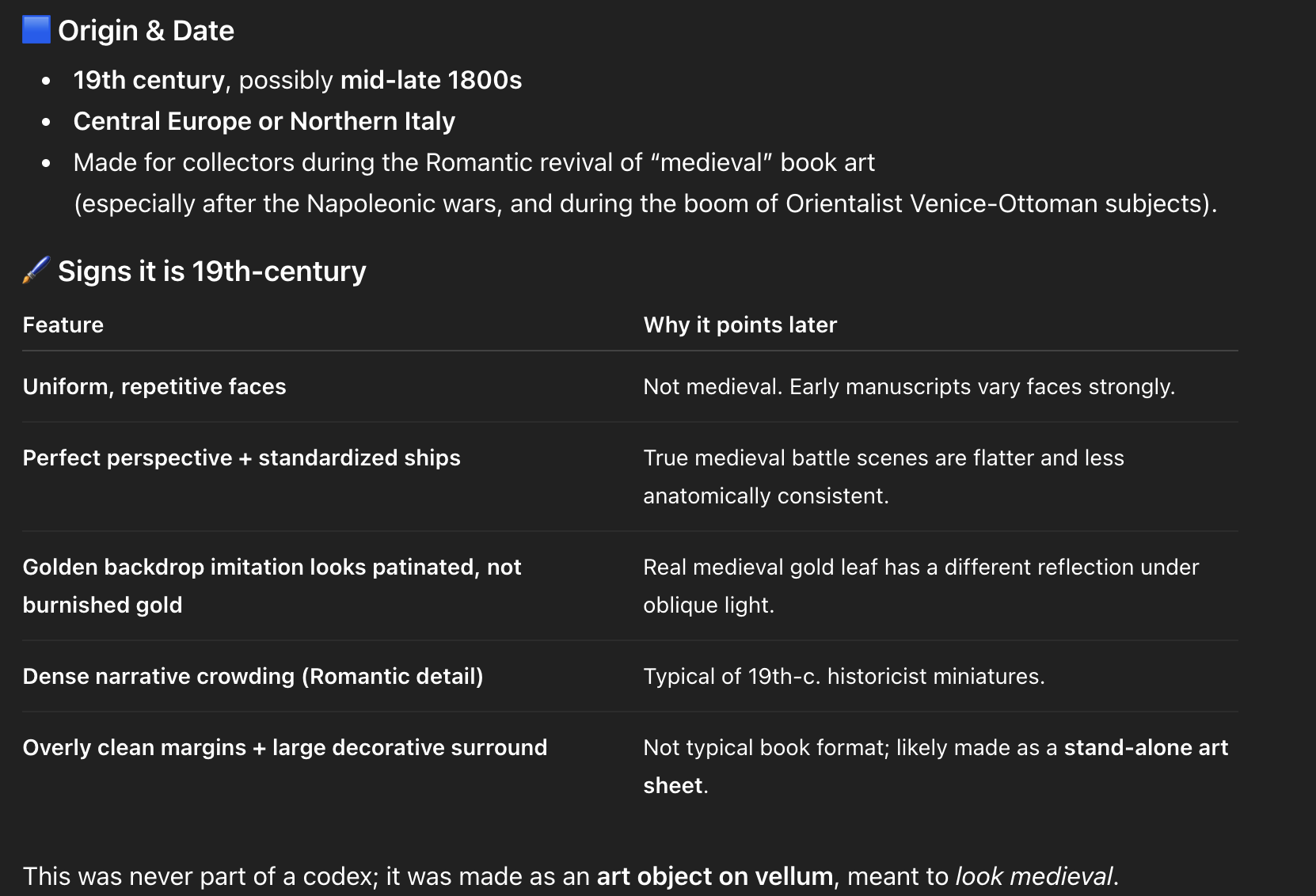
Proposed Name: “Master of the Spanish Arrival”
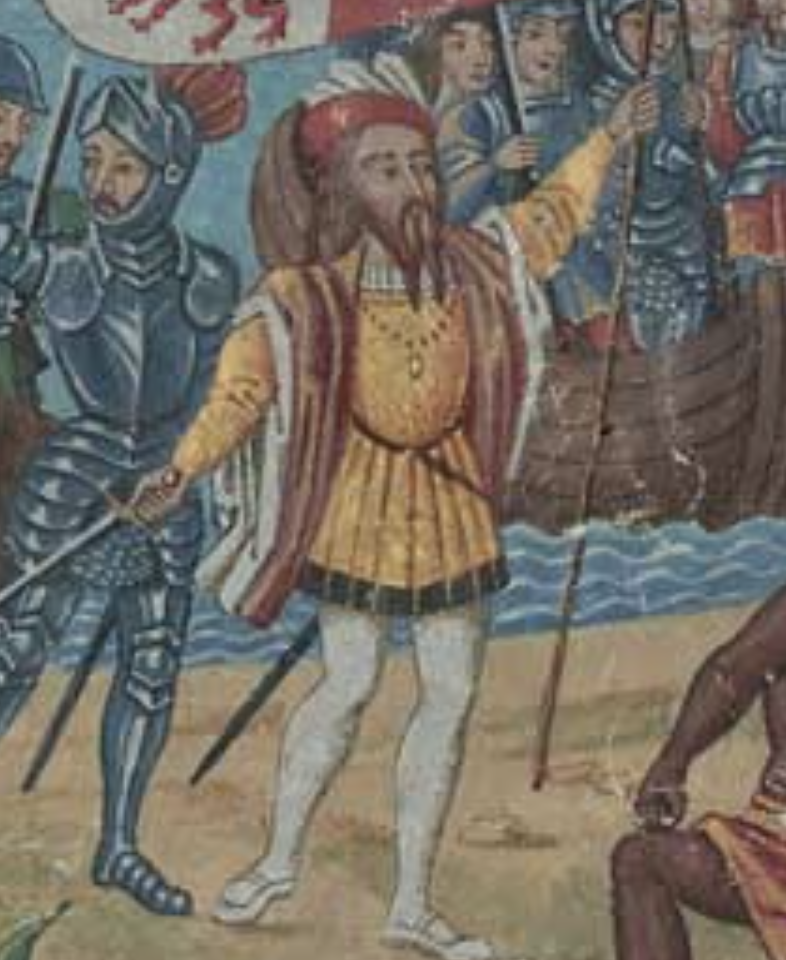
Seeing that this Spanish Forger subgroup has a distinct hand (potentially enough to fool bidders, but perhaps not AI) and is somewhat prolific (multiple pieces in JHU’s collection), I propose we recognize this subgroup and propose the name Master of the Spanish Arrival - a nod both to the Spanish Forger and to the Christopher Columbus Discovering America miniature described by Johns Hopkins University. That Columbus miniature prompted this line of inquiry, and its observation that the Spanish Forger “inspired other illumination forgers” suggests this is likely a distinct, repeatedly observed hand.
In conclusion, this piece is clearly a forgery, although it is not certain whether investors knew it at the time of the 2021 or 2025 auctions (despite major price collapse), and it was executed well enough to attract some bidders and land in the price range of above-average autograph Spanish Forger pieces. At minimum there is beginning to be enough research to identify forgeries - specifically, this piece is has an identifiable hand that is distinct from the typical Spanish Forger. I was pleasantly surprised by AI’s results and confidence in flagging the strangeness of the piece and there may be additional value here where AI can support researchers.
I would be very interested keeping track and cataloging similar style pieces of this subgroup that could be floating around in institutions or at auction. I suspect this piece will come back to auction a 3rd time, and that similar pieces will surface; especially since auction houses have not been able to distinguish forgeries outside of obvious autograph Spanish Forgers. I believe there is serious value in naming these subgroups to keep researchers and auctioneers aware; after all, once the Spanish Forger was named, countless examples were compared and found.