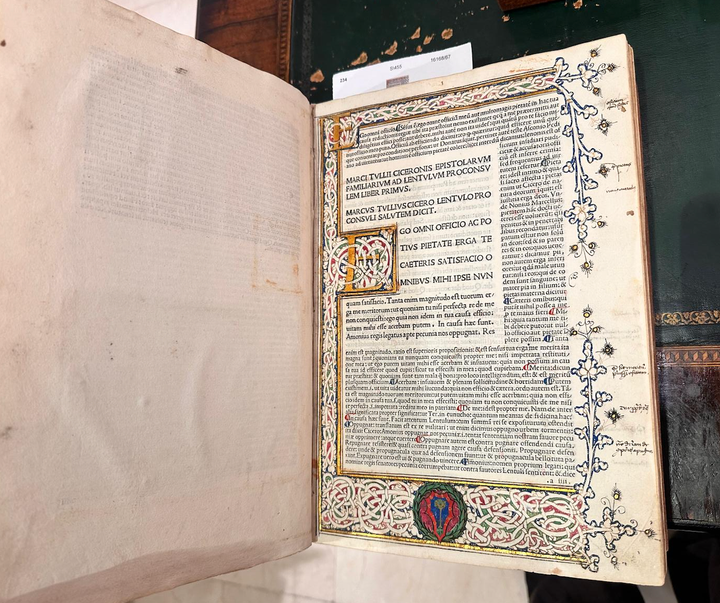
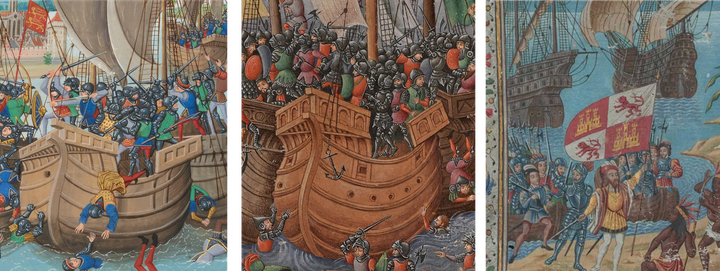
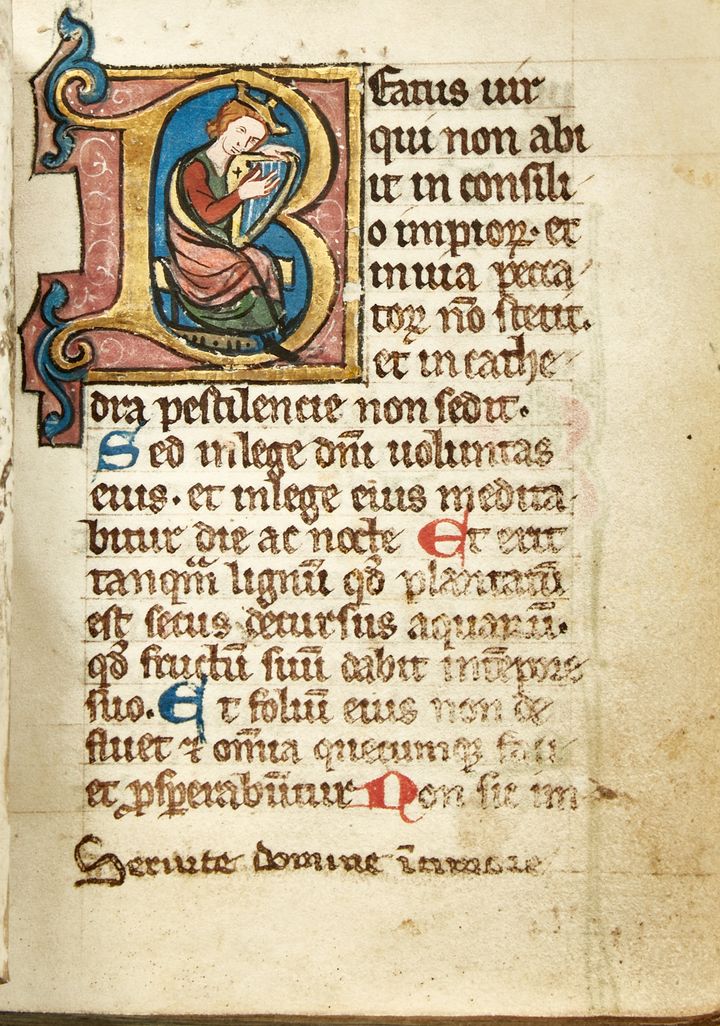
What is Fragmentology?
The intersection of Art and Book collecting/studies
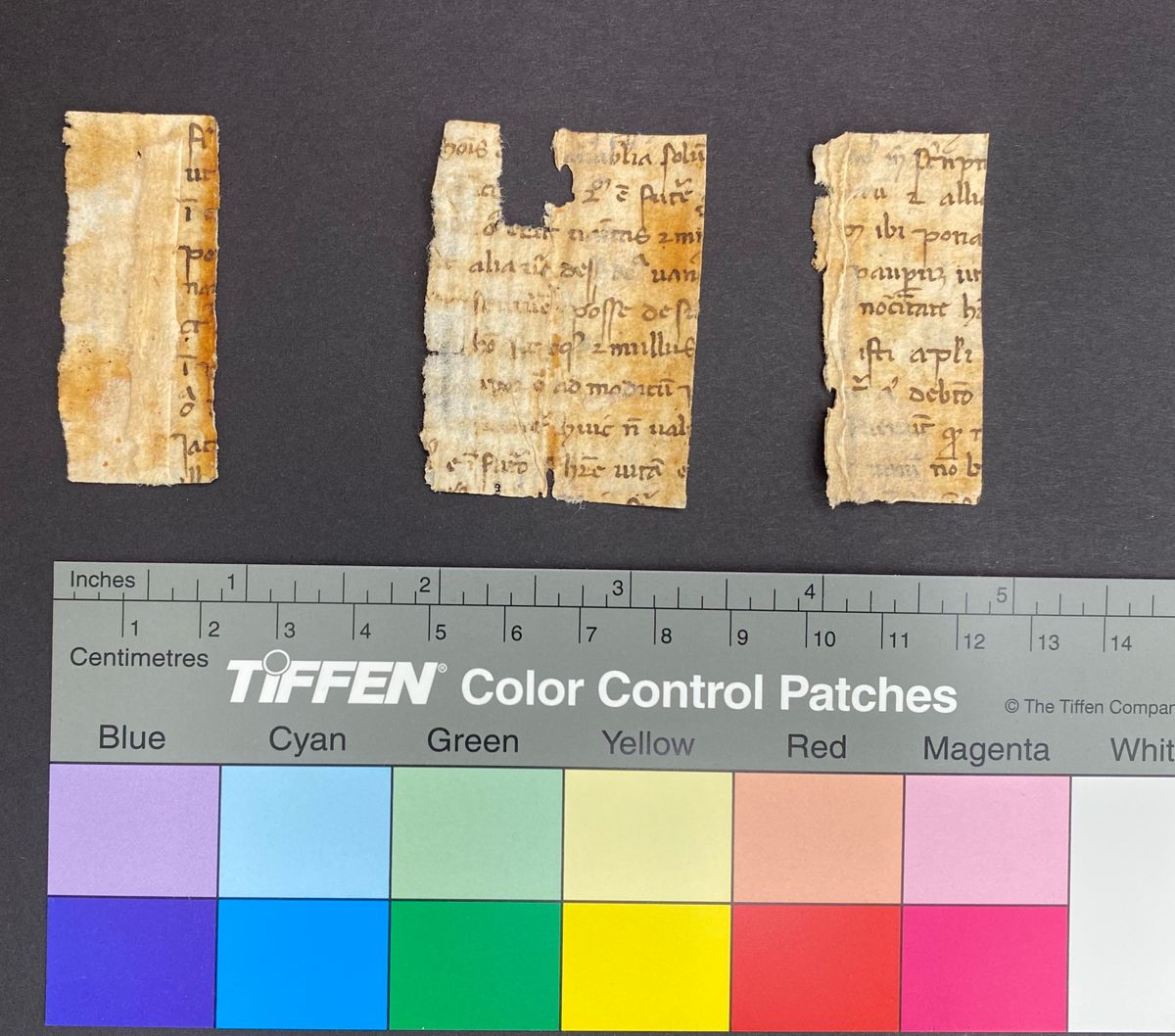
Fragmentology is the study of dismembered manuscripts: individual or collections of leaves, cuttings, binding waste, and isolated initials, alongside the attempt to trace them back to their original books. It sits at the intersection of codicology (the study of the physical book), paleography (handwriting), art history, and increasingly, digital humanities.
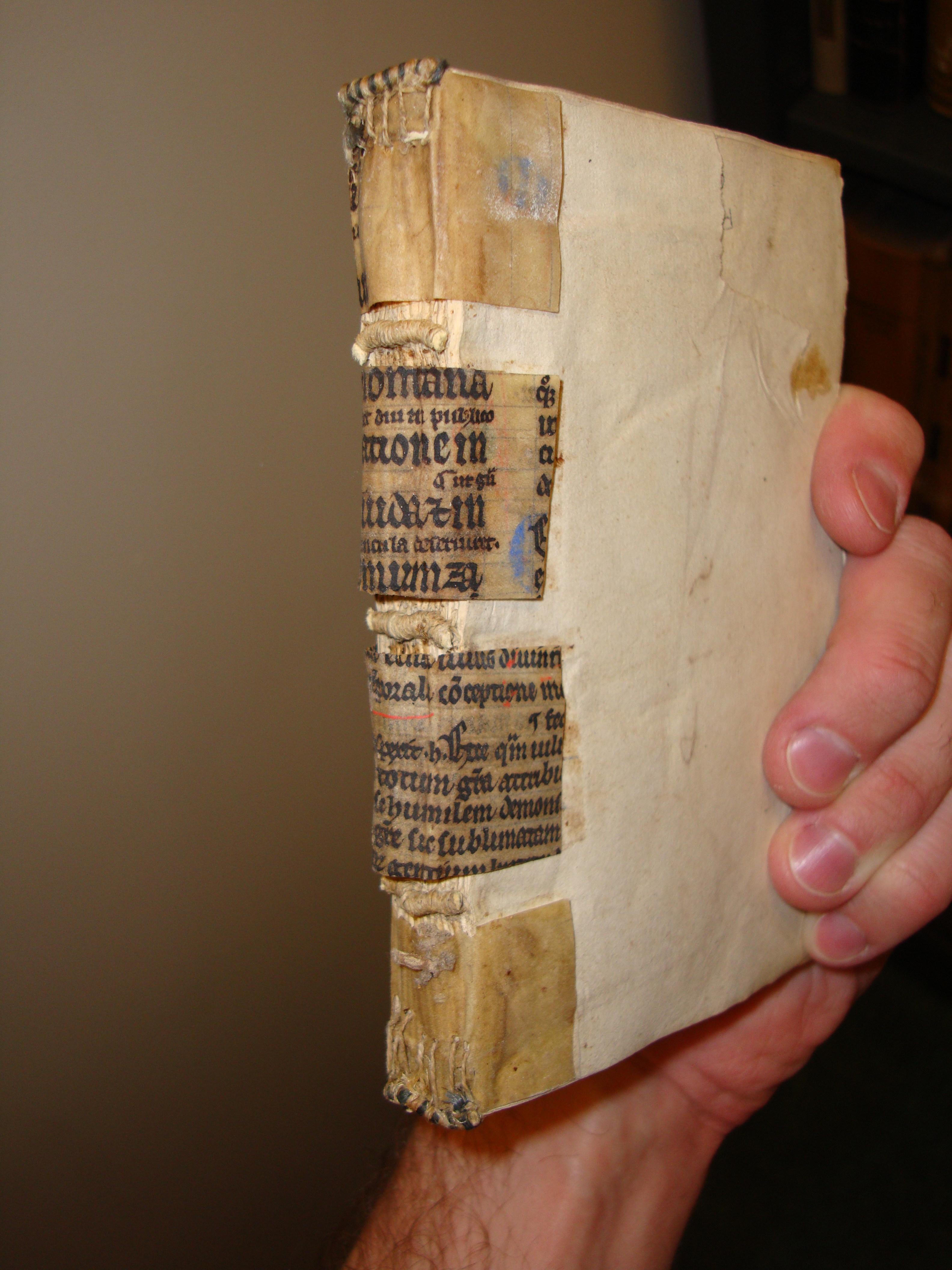
Fragmentology matters in an increasingly digital/AI age because of its focus on historically significant objects that are unique, sometimes beautiful, and cannot be replicated. It involves academic and non-academic audiences and combines elements of Art collecting and Rare Book collecting. Many manuscript fragments are accessible at the “lowest/cheapest” end of the market ($20-100) as well as extreme premium (such as a leaf from the Gutenberg bible that can be sold for hundreds of thousands).
History
The concept of breaking manuscripts is not new (in fact it can be traced back as early as 12th and 13th centuries), but the reasons for doing so have changed dramatically:
Pre-18th century “Functional”: Manuscript leaves were “recycled” and broken for functional purposes. Scribes often scraped off old “obsolete” text and reused leaves for different manuscripts. Additionally, when the printing press created the book industry, manuscripts (which were written on vellum, very sturdy material) were broken and leaves reused as structural objects to reinforce parts of books such as for bindings, pastedowns, reinforcing spines, etc. (often times this is characterized as “binding waste”).
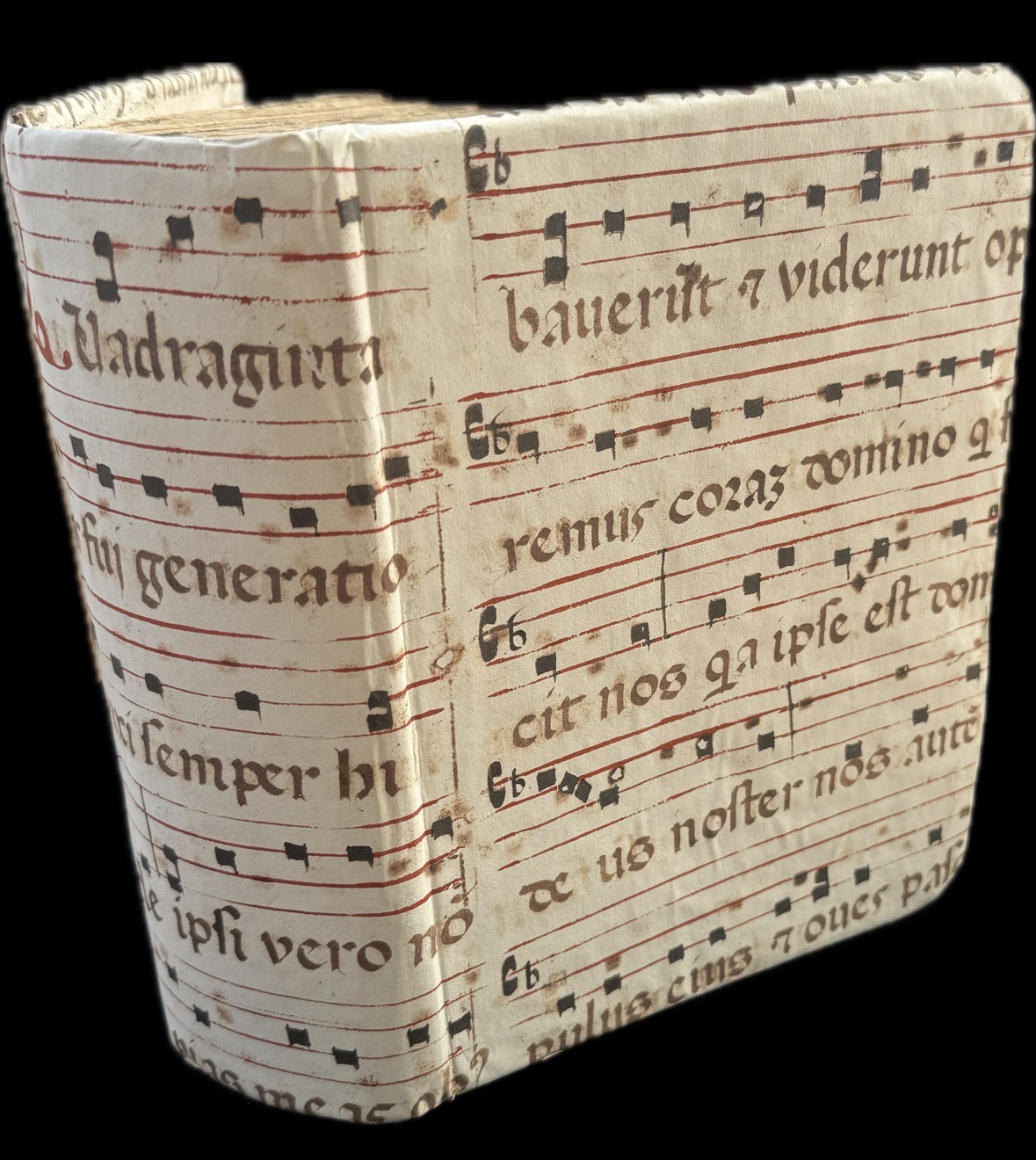
Example of an Antiphonal leaf used as the binding of a book. 18th-early 20th century “Art”: Starting with the Napoleonic Wars, soldiers who sacked towns in Italy recognized the beauty of manuscript miniatures and instead of removing the book in its entirety (which was very heavy and prone to weight-based import/export taxes), cut the initial out of large antiphonaries (common in Italy) and other ecclesiatic books. Later at the turn of the century, Victorian and arts-and-crafts movement-inspired collectors again recognized manuscripts for their beauty and cut pieces out and created their own collages and medleys of manuscript borders and miniatures.
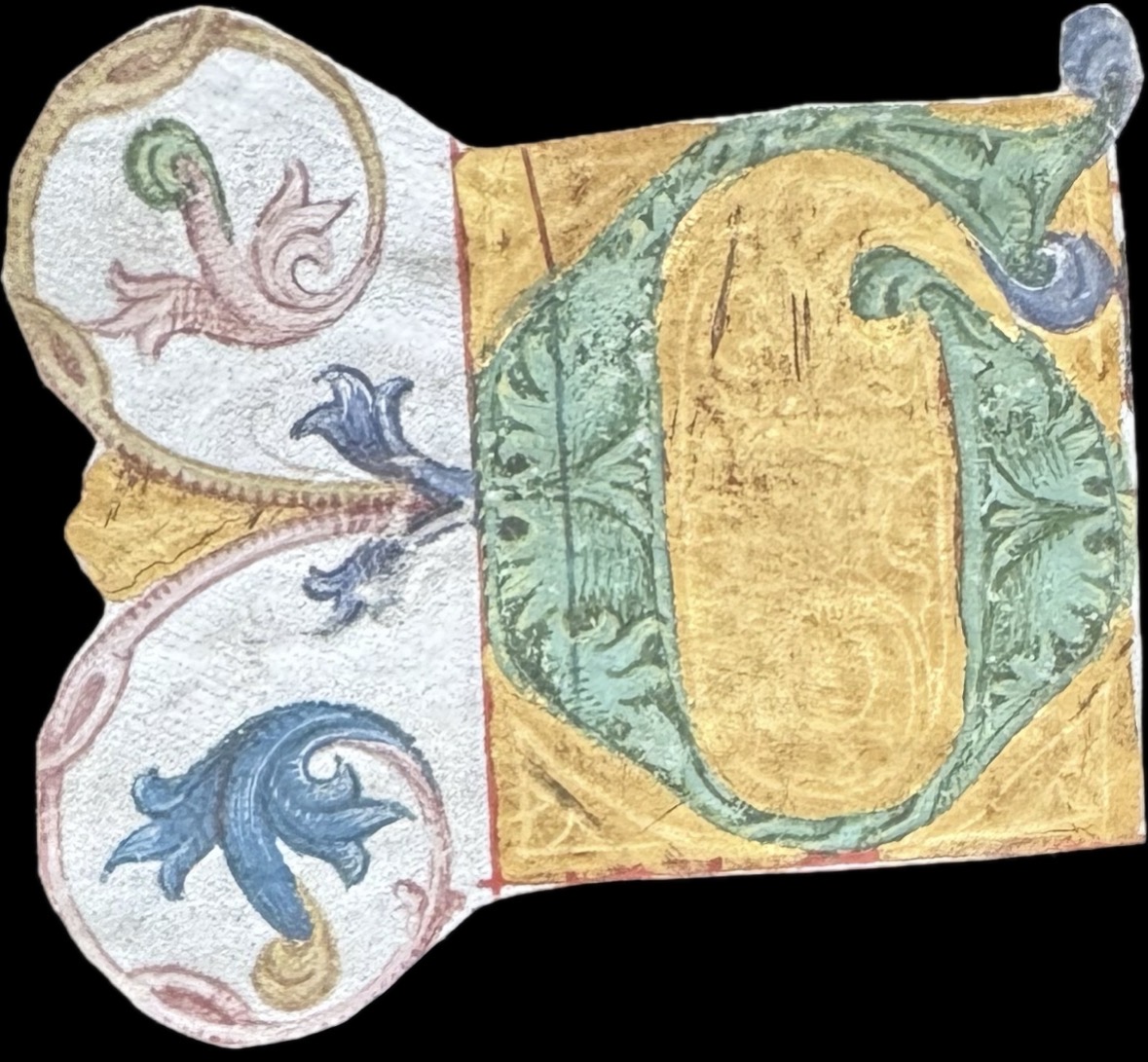
Carefully excised Initial from German Antiphonary or Breviary 20th century to present “Profit”: Mid-20th century onwards saw a significant departure from before into overt book-breaking for profit. The most famous biblioclast, especially of medival manuscripts, is Otto Ege who was a lecturer, bookdealer, and self-ascribed book-breaker who (fallaciously) justified his biblioclasm as a noble attempt of putting these art and scholarly objects into the hands of thousands of people - better than keeping them in institutional Ivory Towers. Since Ege, there have been other notable book-breakers such as Duschnes, Ferrini, and active book-breaking from dealers today.
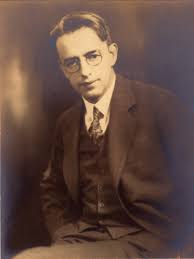
Photograph of Otto F. Ege from Denison University
Digitization Efforts and the Future
The future looks extremely promising for Fragmentology. Through the internet, naturally rare books, manuscripts, and fragments made their way onto the internet (eBay, institutions’ digital collections, etc.). This led to cascading events:
- Auctions became more democratized; more people have access to the same information so there was no more regional “edge” and competition increased. This leads to more efficient price discovery, and in a way, assigns some value to these pieces.
- Individual leaves and cuttings are recognized and collected as “art”. Unique and beautiful pieces attract new types of collectors who, with even a small amount of research, get sucked into the concept of owning a unique piece of history (similar to a collectible).
- Though shiny pieces attracted attention because the intellectual barrier to identifying plain text leaves is high, in a world of AI, loose leaves may be immediately connected with other loose leaves out there floating in auction lots, private, and institutional collections.
With these efforts, beautiful pieces of “art” is accessible to all (not just in an academic box in the Special Collections basement) and information can be readily available through AI (identifying text, and hopefully eventually identifying similar leaves). In fact, I have some examples of when AI was able to identify a forgery and find similar pieces from the same forger.
Additionally, I’m noticing an increase in interest in the study, reconstruction, and sometimes repatriation of non-European manuscripts such as from the Middle East (Armenian manuscripts, Qur’ans, etc.), Africa (especially Ethiopia), and parts of Asia.
Why is Fragmentology the subject of this blog?
Fragmentology is important to me and a big focus of what I do because of my foray from rare book collecting into buying individual manuscript leaves. After learning to appreciate unique hands and evolution in manuscript production, I also started noticing similar leaves appearing at auctions, in dealer catalogues, and on eBay. Originally I kept track of leaves, their provenance, and attribution (some of which I’m dubious about), I figured it was more valuable to put this information out there.
Recommended Resources
- Rare Book School Course: https://rarebookschool.org/courses/details/m100v/
- Lisa Fagan Davis’ Blog:https://manuscriptroadtrip.wordpress.com/
- Wikipedia page: https://en.wikipedia.org/wiki/Fragmentology_(manuscripts)
- Discover institutions’ Fragments on Fragmentarium:https://fragmentarium.ms